
Key Takeaways
- A lesion is a broad medical term for an area of abnormal or damaged tissue, a lump is an everyday word for a bump or swelling you can see or feel, and a mass is the medical term for a lump in the body.
- None of these words means cancer on its own, because lesions and masses can be benign (not cancer) or malignant (cancer).
- A lesion can be a tumor or a cyst, but many lesions, such as sores and wounds, are neither.
- Describing where a spot is, how it feels, and how it has changed helps your doctor understand what you are noticing.
- Syracuse Hernia Center, led by board-certified general surgeon Dr. Robert Weiss, provides evaluation and treatment of skin lesions and lumps in the Syracuse, NY area, and you can request an appointment online or call (315) 452-2727.
What Is a Skin Lesion? A Plain-Language Definition
The National Cancer Institute (NCI) defines a lesion as an area of abnormal or damaged tissue caused by injury, infection, or disease.
- A lesion can occur anywhere in or on the body, including the skin.
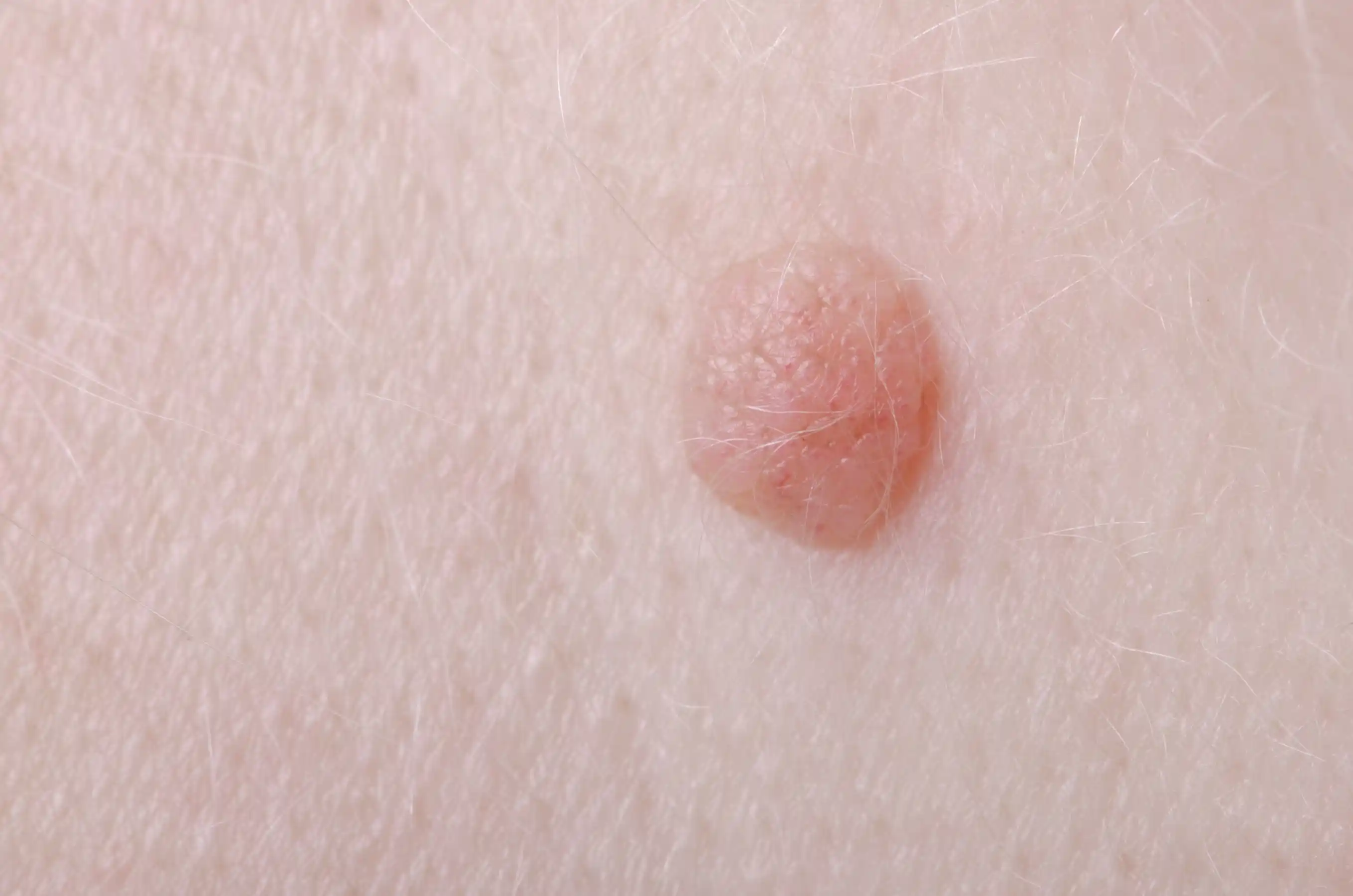
- A skin lesion is any abnormal growth or area of skin that has changed in appearance or feel.
- According to Cleveland Clinic, most skin lesions are noncancerous and harmless, but some can be a sign of something more serious.
- Common examples of benign skin lesions include birthmarks, moles, skin tags, freckles, and acne.
Primary and Secondary Skin Lesions: Basic Terminology
Doctors often sort skin lesions into two groups. Cleveland Clinic describes them this way:
- Primary lesions are changes in your skin that are not caused by another condition. Examples include a flat mark of a different color (macule), a raised bump (papule), a raised solid bump (nodule), and a fluid-filled blister (vesicle).
- Secondary lesions are changes to a primary lesion, often from itching or injury. Examples include a crust (dried fluid around a wound), a scale (flaky skin), a scar, and an ulcer (open sore).
What Is a Lump, and How Does It Differ From a Lesion?
'Lump' is an everyday word, not a strict medical term. People usually use it to describe a bump or swelling they can see or feel.
- A lump may sit on the surface of the skin or under it.
- A lump on the skin can also be called a lesion, so the two words often overlap.
- Many lumps under the skin are felt more than they are seen.
- One common example is a lipoma, a lump of fatty tissue that grows just under the skin. Lipomas usually feel rubbery, move easily when touched, and are not cancerous.
The key difference is that 'lesion' describes any area of abnormal tissue, flat or raised, while 'lump' describes something raised or swollen that you can feel.
How a Mass Is Typically Described and Evaluated
The NCI describes a mass as a lump in the body. According to the NCI, a mass may be caused by abnormal cell growth, a cyst, hormonal changes, or an immune reaction, and it may be benign (not cancer) or malignant (cancer).
In other words, 'mass' is often the word a doctor uses for what a patient calls a lump.
How Lesions and Masses Are Evaluated
Cleveland Clinic explains that a healthcare provider looks at the features of a skin lesion, including its size, shape, texture, color, how many there are, and how deep it goes. Your provider will also ask about your medical history.
Often no tests are needed. If they are, Cleveland Clinic lists options such as an allergy test, a blood test, a swab, an imaging test, or a biopsy. A biopsy removes tissue so it can be studied under a microscope.
Is a Lesion a Tumor or Cyst?
A lesion can be a tumor or a cyst, but it does not have to be either one. The NCI lists wounds, ulcers, abscesses, sores, cysts, and tumors as examples of lesions.
| Term | Plain-Language Meaning | Can It Be Benign? | Example |
|---|---|---|---|
| Lesion | Any area of abnormal or damaged tissue | Yes, it may be benign or malignant | A mole, a sore, a scar |
| Lump | An everyday word for a bump or swelling you can feel | Yes, many are benign | A lipoma under the skin |
| Mass | The medical term for a lump in the body | Yes, it may be benign or malignant | A lump found during an exam |
| Tumor | An abnormal mass of tissue that forms when cells grow and divide more than they should | Yes, tumors may be benign or malignant | A lipoma is a benign tumor |
| Cyst | A closed, sac-like pocket of tissue that may be filled with fluid, air, pus, or other material | Yes, most cysts are benign | A cyst under the skin |
Why Skin Lesion Terminology Matters for Diagnosis and Treatment
These words describe what something looks or feels like. They do not tell you what it is.
- Hearing 'lesion' or 'mass' does not mean a diagnosis of cancer.
- A diagnosis comes from an exam and, when needed, testing such as a biopsy.
- Treatment depends on what the spot turns out to be. Cleveland Clinic notes that some lesions are treated with creams or medicines, some are surgically removed, and skin cancer is treated with surgical removal and possibly other medicines.
- At Syracuse Hernia Center, Dr. Weiss manages a wide range of skin lesions and masses, from benign to malignant.
Knowing the terms can help you follow along during your visit and ask better questions.
How to Describe Your Symptoms Clearly at an Appointment
Clear details help your doctor understand what you are noticing. Before your visit, write down:
- Where the spot or lump is on your body.
- When you first noticed it.
- Its size, compared to something common such as a pencil eraser or a pea.
- How it feels: soft or firm, and whether it moves when you touch it.
- Whether it has changed in size, shape, or color.
- Any symptoms, such as pain, itching, bleeding, or drainage.
- Whether you have had similar spots before.
Questions you might ask, based on Cleveland Clinic's suggestions:
- Is this skin cancer?
- Can you remove this skin lesion?
- Could my skin lesion be part of a more complex condition?
Bring Your Lump or Lesion Questions to Dr. Weiss
Lesion, lump, and mass are related terms, and none of them means cancer on its own. A professional evaluation is the best way to learn what a specific spot or lump is and whether it needs treatment.
To have a skin lesion, lump, or mass evaluated, request an appointment with Syracuse Hernia Center or call (315) 452-2727. Learn more about skin lesion and lump care with Dr. Robert Weiss, or visit the Syracuse Hernia Center homepage.
Frequently Asked Questions
What is a skin lesion?
A skin lesion is any area of skin that looks or feels different from the skin around it. The National Cancer Institute defines a lesion as an area of abnormal or damaged tissue caused by injury, infection, or disease. Most skin lesions are harmless.
What is a lump?
A lump is an everyday word for a bump or swelling you can see or feel. Doctors often call a lump in the body a mass. Many lumps, such as lipomas, are not cancer.
Is a lesion a tumor or cyst?
A lesion can be a tumor or a cyst, but it does not have to be. The National Cancer Institute lists wounds, ulcers, abscesses, sores, cysts, and tumors as examples of lesions.
Does a mass mean cancer?
No. The National Cancer Institute notes that a mass may be benign (not cancer) or malignant (cancer). An exam and, if needed, testing are used to find out.
Where can I have a skin lump or lesion evaluated near me in Syracuse, NY?
Syracuse Hernia Center provides evaluation and treatment of skin lesions and lumps for patients throughout the Syracuse, NY area. Request an appointment online or call (315) 452-2727.
