
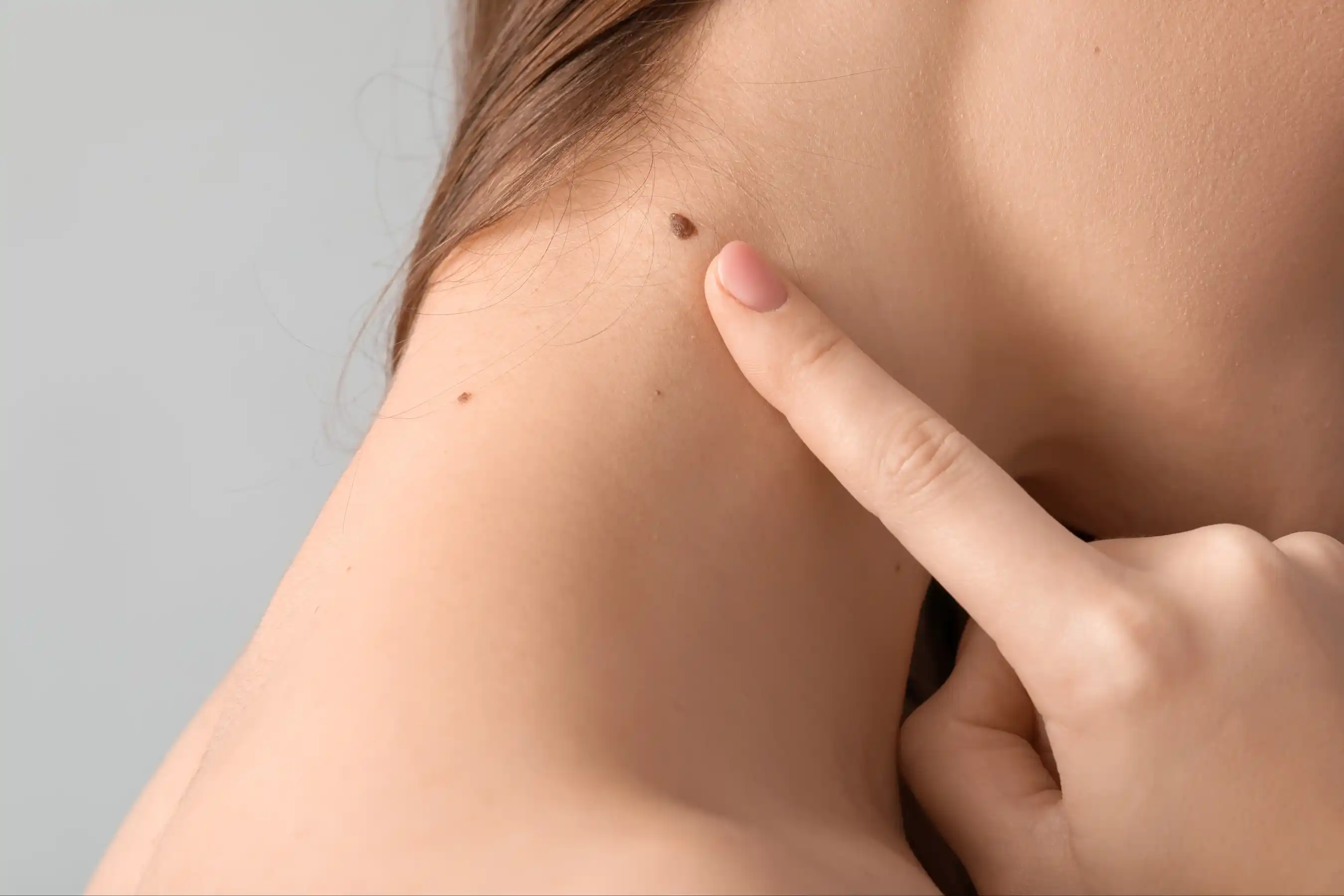
Key Takeaways
- National Healthy Skin Month takes place every November and is a good reminder to check your moles, spots, and lesions, not just your skincare routine.
- The ABCDE warning signs (Asymmetry, Border, Color, Diameter, and Evolving) can help you spot a mole that is worth showing to a doctor.
- A mole or spot that itches, bleeds, or does not heal is also worth a professional look.
- Most moles are harmless, but it can be hard to tell the difference on your own, so any mole you are unsure about is worth having checked.
- Syracuse Hernia Center, led by board-certified general surgeon Dr. Robert Weiss, provides skin lesion and lump evaluation and treatment for patients in the Syracuse, NY area, and you can request an appointment online or call (315) 452-2727.
What National Healthy Skin Month Focuses On Each November
The American Academy of Dermatology (AAD) designates each November as National Healthy Skin Month. The AAD held the first one in November 1997.
- The month encourages people to pay attention to their skin, learn about skin care, and build habits that support healthier skin, hair, and nails.
- Sun protection is a major focus. Dermatologists recommend seeking shade, wearing sun-protective clothing, and using sunscreen that is broad-spectrum, water resistant, and SPF 30 or higher.
- Paying attention to your skin also means noticing changes in moles, spots, and lesions.
A skin lesion is any abnormal growth or area of skin that has changed in appearance or feel. A mole is a common type of skin growth, usually a small brown, tan, or black spot.
What a Typical Mole Looks Like
Knowing what a typical mole looks like makes it easier to notice one that is different. According to the American Cancer Society (ACS), a normal mole is:
- Usually an evenly colored brown, tan, or black spot.
- Either flat or raised.
- Round or oval.
- Usually smaller than 6 millimeters across, about the width of a pencil eraser.
The ACS also notes that most moles appear during childhood or young adulthood, and that once a mole has formed, it usually stays the same size, shape, and color for many years. Moles that appear later in life should be checked by a doctor.
The ABCDE Warning Signs for Concerning Moles
The ABCDE rule is a simple memory tool. The ACS describes it as a way to help you decide whether a spot should be checked for melanoma. Melanoma is a type of skin cancer that starts in the cells that give skin its color.
| Letter | Stands For | What to Look For |
|---|---|---|
| A | Asymmetry | One half of the mole does not match the other half. |
| B | Border | The edges are irregular, ragged, notched, or blurred. |
| C | Color | The color is not the same all over and may include shades of brown, black, pink, red, white, or blue. |
| D | Diameter | The spot is larger than 6 millimeters across, although melanomas can sometimes be smaller. |
| E | Evolving | The mole is changing in size, shape, or color. |
The ACS also points to the 'ugly duckling sign,' which means a spot that looks different from the other spots on your skin.
Having one of these signs does not mean you have skin cancer. It means the spot is worth a closer look by a doctor.
Skin Cancer Warning Signs Beyond ABCDE: Lesions That Itch, Bleed, or Won't Heal
Not every warning sign fits the ABCDE rule. The ACS lists other skin changes to watch for:
- A sore that does not heal.
- Color spreading from the border of a spot into the skin around it.
- Redness or new swelling beyond the border of a mole.
- A change in how a spot feels, such as itchiness, tenderness, or pain.
- A change in the surface of a mole, such as scaliness, oozing, bleeding, or a new lump or bump.
Syracuse Hernia Center's skin lesions and lumps page also lists persistent itching, tenderness, or bleeding in a mole or spot as a reason to see a healthcare provider.
Why 'Just Keeping an Eye on It' Isn't Always the Right Call
Watching your skin at home is helpful because self-checks help you notice when something is new or changing. But a self-check cannot tell you what a spot actually is.
- The ACS notes that it can be hard to tell the difference between melanoma and an ordinary mole, and recommends showing your doctor any mole you are unsure of.
- A spot that keeps changing, keeps bleeding, or does not heal is not something to keep watching for months.
- An evaluation can give you a clear answer, and often that answer is reassuring.
When to See a Doctor About a Mole
Consider scheduling an evaluation if you notice:
- A new mole that appears in adulthood.
- A mole with any of the ABCDE warning signs.
- A spot that looks different from your other moles.
- A mole or spot that itches, bleeds, or is tender and does not settle down.
- A sore that does not heal.
What to Expect If a Mole or Lesion Needs a Closer Look
The Evaluation Visit
At Syracuse Hernia Center, Dr. Weiss personally diagnoses and treats skin lesions and masses, and he sees every patient himself. An evaluation usually includes a look at the spot and questions about how long you have had it and whether it has changed. If needed, Dr. Weiss may recommend further testing.
Most skin lesion procedures at Syracuse Hernia Center are done under local anesthesia (numbing medicine), and most are outpatient, which means you go home the same day.
Understanding Skin Lesion Biopsy Results
A biopsy is a procedure that removes a small sample of tissue, or the whole spot, so it can be studied under a microscope. The AAD explains what happens after a skin biopsy:
- The removed skin goes to a lab, where a dermatopathologist examines it. A dermatopathologist is a doctor who specializes in diagnosing skin disease under the microscope.
- The dermatopathologist writes a report on the findings.
- Your doctor reviews the report and then contacts you with the results.
- If the report shows the spot is not skin cancer, you may not need further treatment. If treatment is needed, your doctor will talk through next steps with you.
How long results take can vary, so ask your provider when to expect them.
How to Schedule a Skin Evaluation in the Syracuse, NY Area
Getting a mole or lesion checked at Syracuse Hernia Center is straightforward:
- Request an appointment online or call (315) 452-2727.
- Office hours are Monday through Friday, 8:30 a.m. to 4:30 p.m.
- Some insurance plans require a referral, and the office can help with that.
- Parking is free.
Have a Changing Mole Checked by Dr. Weiss This November
National Healthy Skin Month is a good time to look closely at your skin and act on any mole or lesion that is new, changing, itchy, bleeding, or slow to heal. A professional evaluation is the only way to know what a spot is.
To have a mole or lesion evaluated, request an appointment with Syracuse Hernia Center or call (315) 452-2727. Learn more about skin lesion and lump care with Dr. Robert Weiss, or visit the Syracuse Hernia Center homepage to see all general surgery services.
Frequently Asked Questions
What is National Healthy Skin Month?
National Healthy Skin Month is an awareness month that the American Academy of Dermatology holds every November. It encourages people to pay attention to their skin and build healthy habits such as sun protection.
When should I see a doctor about a mole?
See a doctor about a mole that is new in adulthood, changing, different from your other moles, or showing any ABCDE warning sign. Moles that itch, bleed, or do not heal are also worth checking.
What are the most common skin cancer warning signs?
According to the American Cancer Society, the most important warning sign of melanoma is a new spot or a spot that is changing in size, shape, or color. Other signs include a sore that does not heal and changes such as itching, tenderness, scaliness, oozing, or bleeding.
How long does it take to get skin lesion biopsy results?
Timing varies. After a biopsy, the tissue is examined in a lab, a report is written, and then your doctor reviews it and contacts you. Ask your provider when to expect your results.
Where can I get a mole checked near me in the Syracuse, NY area?
Syracuse Hernia Center offers evaluation and treatment of skin lesions and lumps with Dr. Robert Weiss. You can request an appointment online or call (315) 452-2727.
